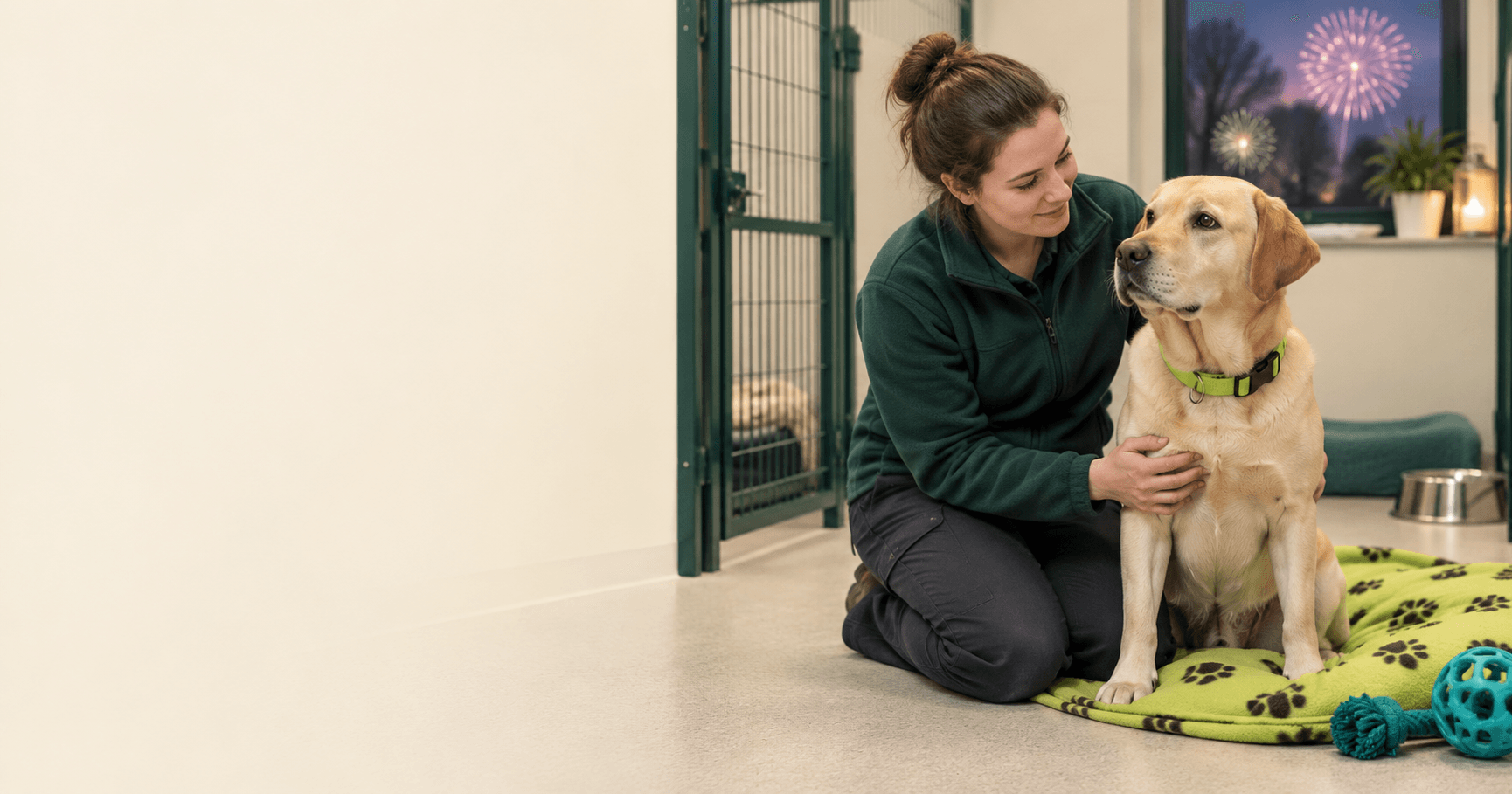
Heatwave Plan for Dog Boarding Kennels: An Australian Guide
A full kennel and a severe heatwave are a difficult combination. This Australian guide helps boarding and daycare operators protect high-risk dogs, adjust daily routines and prepare for cooling failures.
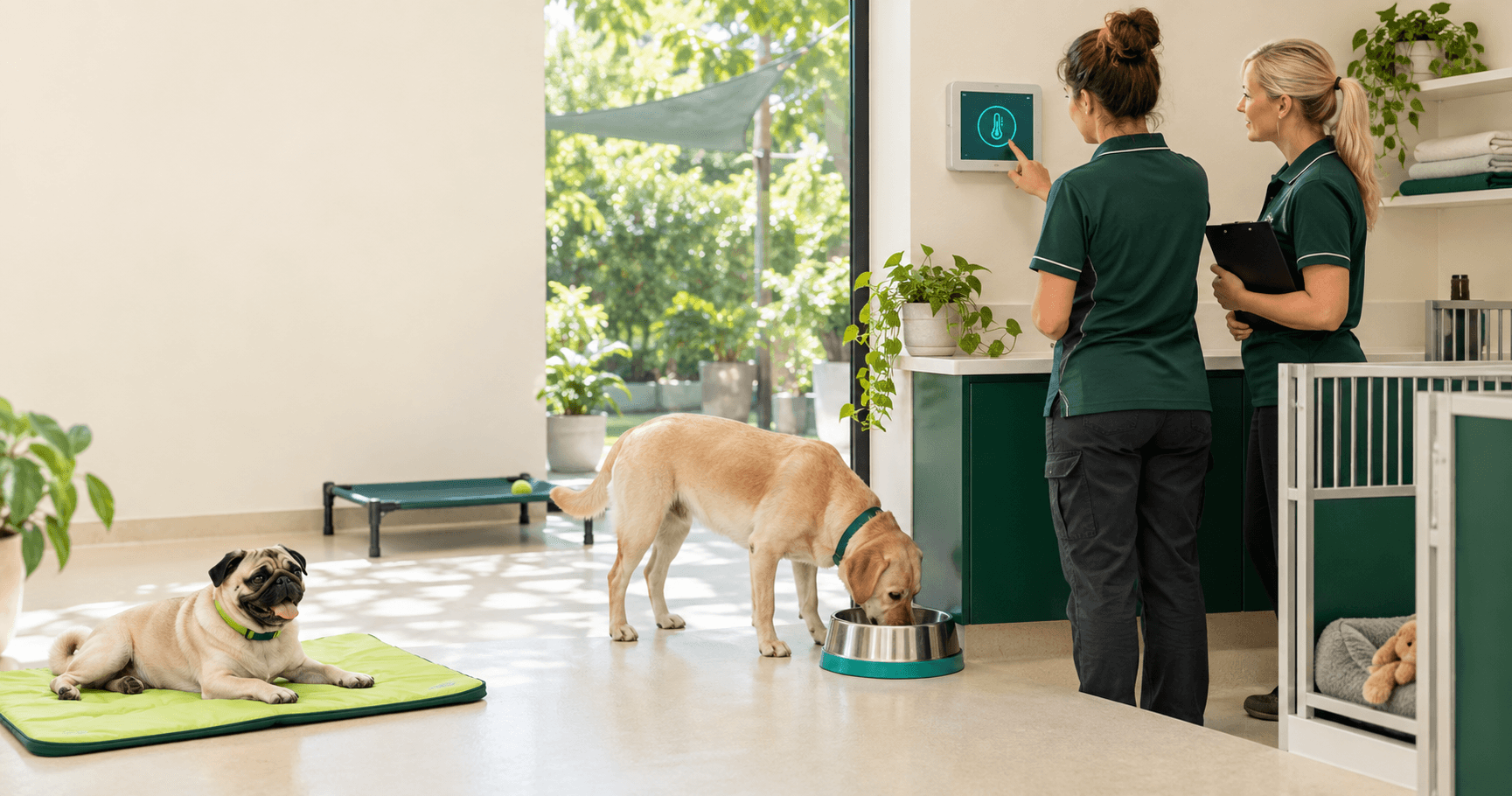
In this article
It is 7.30am, and the boarding dogs are already awake.
Normally, the morning begins with outdoor exercise while staff clean rooms and prepare breakfast. Today, however, the forecast is severe, the overnight temperature barely dropped and the concrete exercise yard already feels warm.
One dog is an elderly Labrador. Another is a Pug that pants during mild activity. Three new arrivals are expected after lunch, including one travelling nearly an hour by car.
The booking calendar says it is an ordinary day. The weather says it is not.
For a boarding kennel or dog daycare centre, a heatwave is more than an animal-care concern. It affects exercise, transport, room allocation, cleaning, staffing, customer communication and emergency planning—all while the business remains responsible for animals with very different levels of heat tolerance.
A practical heatwave plan helps the team make those decisions before the hottest part of the day arrives.
Start with a trigger, not a feeling
“Take extra care when it is hot” is too vague for a working procedure.
One employee may consider 30°C dangerous, while another waits for 38°C before changing the routine. Humidity, overnight temperatures, shade, ventilation and the design of the facility also affect conditions.
Build your plan around several triggers:
- Bureau of Meteorology heatwave forecasts or warnings
- Forecast maximum and overnight minimum temperatures
- Local humidity and wind conditions
- Temperature in animal accommodation
- Temperature in exercise areas
- Cooling-system performance
- Number and needs of high-risk animals
- Advice from your facility’s veterinarian
The Bureau of Meteorology defines a heatwave as three or more days when both daytime and night-time temperatures are unusually high for a location. Its service assesses heat relative to local conditions, which is more useful than applying one temperature limit to every Australian region. Check the Bureau’s heatwave forecasts and warnings alongside your local forecast.
Create operating levels that suit your facility. For example:
Level 1: Hot-day precautions
Increase temperature checks, move energetic exercise to cooler periods and review water more frequently.
Level 2: Heatwave operations
Reduce outdoor activity, activate high-risk pet plans, adjust staffing and restrict non-essential transport.
Level 3: Critical conditions or cooling failure
Move animals to the safest available area, pause arrivals where necessary and activate veterinary, relocation or emergency procedures.
These are operational categories, not universal veterinary temperature thresholds. Agree on the details with your veterinarian and adapt them to your buildings, climate and licence conditions.
Identify the dogs that may struggle first
A single summer policy does not fit every dog.
The Inner West Council’s current hot-weather guidance identifies short-nosed dogs, older and overweight animals, and dogs with heart or breathing problems as being at greater risk of heatstroke. It also notes that humidity can make cooling through panting less effective. Read the council’s hot-weather pet guidance.
Your booking or intake form should ask:
- Is the dog a brachycephalic or short-nosed breed?
- Has the dog previously experienced heat stress?
- Does it have a heart, breathing or mobility condition?
- Is it overweight, elderly or very young?
- Does excitement cause prolonged panting?
- Is exercise restricted by a veterinarian?
- Does the dog require medication affected by heat or dehydration?
- How does the dog normally cope on hot days?
- May the business contact the dog’s usual veterinary clinic?
- Who is the emergency contact if the owner cannot be reached?
Do not use these answers to make a diagnosis. Use them to determine whether the booking needs individual review and a documented care plan.
A high-risk dog may need a cooler room, shorter toilet breaks, individual rather than group activity, closer monitoring or a different arrival time. In some circumstances, the safest decision may be not to accept the booking unless suitable conditions can be provided.
Measure conditions where the dogs actually are
The temperature at a nearby weather station does not tell you exactly what is happening in a kennel room, grooming area or enclosed exercise yard.
Place suitable thermometers or environmental monitors in representative locations:
- Sleeping accommodation
- Indoor playrooms
- Outdoor shaded areas
- Reception and arrival areas
- Laundry or drying spaces
- Transport vehicles
- Rooms with weaker airflow
- Temporary holding areas
Avoid placing every sensor directly beside an air-conditioning outlet, open doorway or other location that produces an unrealistically cool reading.
Record conditions at planned intervals during hot weather. Increase the frequency when temperatures rise, ventilation changes or the cooling system appears less effective.
The record should show:
- Time
- Location
- Temperature and, where available, humidity
- Cooling equipment in operation
- Employee initials
- Observed animal concerns
- Corrective action taken
The goal is not to produce paperwork for its own sake. A simple log lets the next shift see whether a room is steadily warming instead of judging it from one reading.
Test cooling before it becomes essential
An air conditioner that worked last February may not be ready for a full facility in December.
Before summer:
- Service air-conditioning and ventilation equipment
- Clean filters and accessible vents
- Test every fan
- Check shade throughout the day
- Inspect water taps, hoses and bowls
- Identify rooms that heat faster than others
- Test backup power arrangements
- Confirm access to portable cooling equipment
- Review generator fuel and safe operating instructions
- Check alarms and remote monitoring, if used
Fans move air but do not automatically make every environment safe, especially when the surrounding air is very hot. Likewise, a shaded outdoor kennel can retain heat if airflow is poor.
Plan for equipment failure. Ask:
- Where will the animals move if one cooling zone fails?
- Can electrical circuits support portable equipment safely?
- Who can authorise an emergency repair?
- Which local facility could receive animals temporarily?
- How will owners be contacted?
- Who controls transport?
- At what point will new arrivals be postponed?
Australia’s official business guidance recommends that an emergency plan cover continuity, immediate action and recovery. It should include emergency contacts, staff responsibilities, evacuation procedures, information backups and regular drills. Business.gov.au provides an emergency-management planning template.
For a kennel, that general plan must also account for leads, crates, medication, feeding information, pet identification and safe transport capacity.
Redesign the day around the heat
On an ordinary day, the timetable may be built around cleaning efficiency and customer convenience. During a heatwave, animal exposure becomes the organising principle.
Possible adjustments include:
- Complete suitable outdoor exercise early
- Replace vigorous play with calmer indoor enrichment
- Shorten outdoor toilet visits
- Use shaded or grassed areas where available
- Avoid hot concrete and artificial surfaces
- Stagger dogs to prevent excited crowding
- Refill and clean water bowls more frequently
- Move arrivals and collections away from peak heat
- Pause non-essential walks or transport
- Allow longer recovery after activity
- Schedule cleaning tasks without compromising cooling or ventilation
Check surfaces rather than assuming they are safe. The Inner West Council advises that if pavement is too hot for a person’s hand, it is too hot for a dog’s paws.
Do not compensate for reduced outdoor exercise by creating uncontrolled excitement indoors. Food enrichment, sniffing activities, quiet training and individual attention may provide stimulation with less physical exertion, where appropriate for the dog.
Record substantial changes to the care routine and tell owners what was adjusted.
Make water a monitored task
“Water available at all times” can become unreliable when bowls are tipped, contaminated or emptied more quickly than expected.
Assign water checks to named employees and record exceptions. Look for:
- Empty or overturned bowls
- Water warmed by direct sunlight
- Contamination from food or bedding
- Dogs guarding shared water
- Animals reluctant to drink
- Increased consumption
- Access problems for dogs with limited mobility
Provide more than one suitable water point where group-care arrangements make that appropriate. Position outdoor bowls in shade and prevent them from being easily knocked over.
Avoid adding products, supplements or flavourings without owner and veterinary approval. Staff should not improvise medical interventions because a dog seems reluctant to drink.
Treat the car park as part of the facility
A dog can be exposed to dangerous heat before it enters the building.
The Australian Veterinary Association warns that temperatures inside stationary vehicles can rise quickly to dangerous levels, even in moderate weather and when windows are partly open. Its policy states that companion animals should not be confined in parked or stationary vehicles where they risk developing hyperthermia. Read the AVA policy on animals in vehicles.
Send hot-weather arrival instructions before the appointment:
- Arrive within the agreed window
- Call reception if assistance is needed
- Do not wait with the pet in a parked vehicle
- Bring the dog directly inside when invited
- Carry water for longer journeys
- Tell staff if the dog has been panting heavily or appears unwell
- Contact the business before travelling if conditions or transport plans change
Reduce queues at reception. If several dogs arrive together, excitement, pulling and prolonged waiting can add physical stress.
If your business provides transport, document pre-departure vehicle checks. Air conditioning should be operating before animals are loaded, and the driver needs an emergency contact and a plan for breakdowns.
Know what requires immediate escalation
Employees need to recognise concerning changes without being expected to diagnose them.
Hot-weather warning signs described by Australian council guidance include heavy panting, heavy drooling, trouble breathing, weakness, agitation, dizziness, rapid heartbeat and dark or red gums and tongue. More advanced signs can include vomiting, diarrhoea, staggering or seizures. Heatstroke is a veterinary emergency.
Your written procedure should tell staff:
- Who takes control
- Where the animal is moved
- How the veterinarian is contacted
- Which first-aid steps have been approved
- Who calls the owner
- What information travels with the dog
- Where the incident is recorded
Do not rely on staff searching the internet during an emergency. Ask your veterinarian to provide or approve a facility-specific first-aid and transport procedure.
Keep veterinary contacts, owner details, medical information and transport equipment accessible to every responsible shift—not inside a locked office available only to the manager.
Protect employees from the same conditions
Kennel staff may be moving dogs, washing bedding, cleaning outdoor areas and carrying supplies while the temperature rises.
Heat planning should cover workers as well as animals. Review:
- Access to drinking water
- Rest breaks
- Shade
- Ventilation
- Heavy or waterproof clothing
- Outdoor-task timing
- Physical workload
- New employees who are not acclimatised
- Staff with individual risk factors
- Lone work
- Travel after a demanding shift
Where possible, move strenuous outdoor tasks to cooler periods and rotate duties. Ensure someone can cover animal supervision when another employee takes a break.
Australian work health and safety requirements are regulated by the Commonwealth, states and territories, so confirm the obligations applying in your jurisdiction. Safe Work Australia provides national information and links to the relevant state or territory WHS regulator.
A tired or heat-affected employee may miss a change in a dog’s behaviour, leave a gate unsecured or record medication incorrectly. Staff wellbeing is therefore part of animal-care reliability.
Explain the policy before customers are affected
A customer may be disappointed if outdoor play is reduced or a midday collection is moved. The conversation is easier when the hot-weather policy was visible at booking.
Explain that the business may:
- Change exercise duration or location
- Replace vigorous activity with indoor enrichment
- Adjust arrival and collection windows
- Review high-risk dogs individually
- Contact the owner or veterinarian if concerns arise
- Postpone transport or non-essential services
- Move animals between suitable accommodation
- Close to new arrivals if safe conditions cannot be maintained
Avoid promising that every advertised activity will happen regardless of weather. Describe what the dog will receive instead.
A useful update might say:
Because of today’s heatwave conditions, outdoor play will finish earlier and dogs will receive shorter toilet breaks plus indoor enrichment. High-risk dogs are being monitored more frequently. Please contact us before travelling if your collection plans change.
The message is calm, specific and centred on welfare.
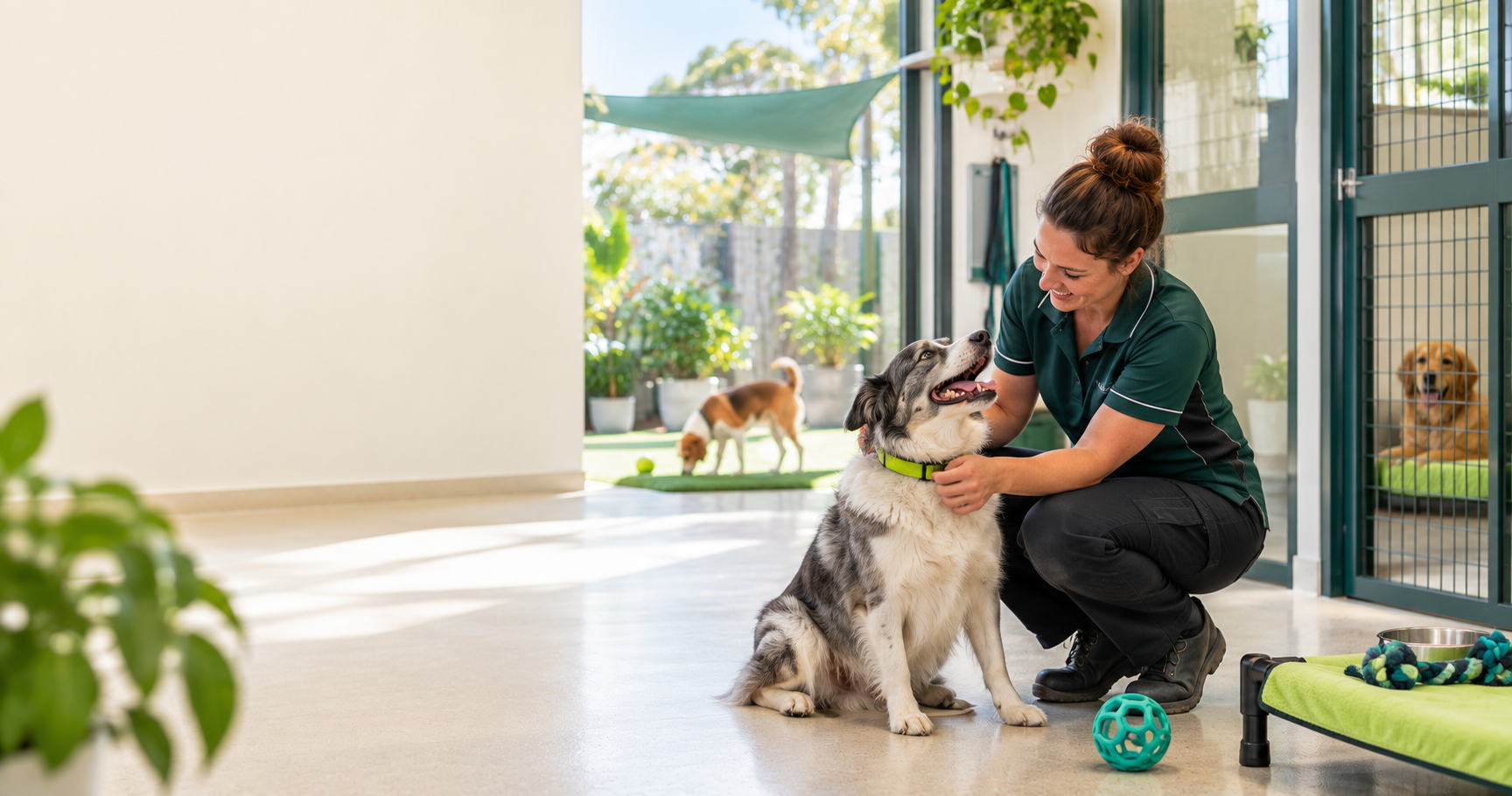
Heatwave action plan for boarding and daycare
Before summer
- Ask your veterinarian to review the heat-response procedure
- Add heat-risk questions to intake forms
- Service cooling and ventilation equipment
- Map hot areas within the facility
- Install and test environmental monitors
- Create high-risk pet care notes
- Identify backup accommodation
- Review emergency transport capacity
- Train staff and run a cooling-failure drill
- Publish the customer hot-weather policy
When a heatwave is forecast
- Confirm the operating level
- Review every booked dog’s risk factors
- Contact owners where additional information is needed
- Adjust exercise and arrival times
- Check cooling equipment and backup supplies
- Confirm staff and emergency coverage
- Brief each shift
- Begin the temperature log
- Prepare indoor enrichment
- Check veterinary and owner contacts
During the hottest period
- Monitor animals and rooms at planned intervals
- Keep water clean, cool and accessible
- Minimise outdoor exertion
- Avoid waiting in vehicles
- Record routine changes
- Escalate concerning signs immediately
- Monitor employees for heat-related illness
- Pause admissions if safe capacity is threatened
After the event
- Review environmental records
- Document incidents and near misses
- Inform owners of significant care changes
- Inspect cooling equipment
- Replenish emergency supplies
- Ask staff where the plan failed or slowed down
- Update individual pet notes
- Revise the procedure before the next hot period
The safest booking is the one you can support
A busy summer calendar can tempt a small facility to accept every available booking.
But room capacity is not always safe operating capacity. A kennel may have twenty vacant spaces and enough cooling for only fifteen high-needs dogs during extreme conditions. A daycare may be able to supervise its usual group but not safely provide the usual exercise schedule.
A good heatwave plan makes those limits visible before the hottest day.
It identifies vulnerable dogs, measures real conditions, gives employees authority to adjust routines and defines what happens when cooling or staffing cannot support the bookings.
The weather cannot be controlled. The decisions around it can be.
Keep hot-weather care information easy to find
GoPet AI’s custom intake forms can help boarding businesses collect health, behaviour, emergency-contact and care information before arrival. Its pet CRM keeps feeding notes, medical details, tags and alerts with each pet’s profile.
GoPet AI does not replace environmental monitoring, veterinary advice or an emergency plan. It can help give staff one organised place to find the individual information needed when hot-weather routines change.
Suggested links
- Custom Pet Intake Forms — use in the heat-risk screening section
- Pet CRM Software — use when discussing high-risk pet alerts and care notes
- Pet Boarding Software — use when discussing upcoming occupancy and arrivals
- Why Australian Pet Businesses Need Online Booking — related article
Sources
- Bureau of Meteorology: Heatwave Forecasts and Warnings
- Bureau of Meteorology: How Will I Know if a Heatwave Is Coming?
- Inner West Council: Keeping Pets Cool in Hot Weather
- Australian Veterinary Association: Companion Animals Confined to Vehicles
- Business.gov.au: Develop an Emergency Management Plan
- Safe Work Australia: WHS Regulators and Authorities
About the author
Jeremy
Petcare Sales Manager
Passionate about helping pet businesses thrive through technology and innovation.
Ready to streamline your pet care business?
Join thousands of groomers, boarding facilities, daycare centres, and vet clinics using GoPet AI to manage bookings, CRM, POS, and invoicing — all in one place.
- ✓Online booking & scheduling
- ✓Invoicing, POS & payments
- ✓CRM & client management
- ✓Staff, loyalty & analytics
Setup in under 2 minutes · Cancel anytime
Related articles
View all
Pet Food Recall Procedure for Pet Stores: A Practical Guide
Read article
10 Most Profitable Pet Business Ideas in 2025 & 2026 (With Startup Costs & Earning Potential)
Read article