How to Get Your First 50 Pet Business Clients With Zero Marketing Budget
Starting a pet business with no marketing budget? This guide covers the exact sales tactics, outreach strategies, and zero-cost growth channels that real pet business owners have used to land their first clients — without spending a dollar on ads.
In this article
Every Successful Pet Business Started With Zero Clients
The groomer with a fully booked calendar three months out. The boarding facility with a waitlist every holiday season. The mobile groomer whose phone rings before she even parks the van. They all started in the same place you are right now: no clients, no reviews, no word of mouth, and very likely no marketing budget to speak of.
The difference between the pet businesses that grow fast and the ones that stall is not how much they spent on advertising in their first year. It is how deliberately they approached the fundamentals of sales and client acquisition during the period when every dollar and every hour counted most.
This guide is about those fundamentals. No paid ads. No influencer campaigns. No expensive software subscriptions in the early days. Just practical, proven, zero-budget tactics that work specifically for pet businesses at the beginning, when you need momentum more than anything else.
Mindset First: You Are Not Just a Pet Care Provider, You Are a Salesperson
The single biggest obstacle most new pet business owners face is not a lack of tactics. It is a reluctance to sell. Many people who start grooming salons, boarding facilities, or mobile grooming businesses did so because they love animals, not because they love sales. The idea of pitching their services to strangers, following up with leads, or asking satisfied clients for referrals feels uncomfortable or even pushy.
Here is the reframe that changes everything: selling your pet care services is an act of service, not an act of imposition. Every pet owner in your area who does not yet know you exists is currently using a less attentive groomer, a more stressful boarding facility, or no professional service at all. When you reach out, when you follow up, when you ask for the referral, you are giving someone the opportunity to find a better option for an animal they love. That is not pushy. That is genuinely helpful.
Hold that frame tightly in the early days. It will make every conversation easier and every follow-up feel less awkward.
Start With Your Warmest Circle: Friends, Family, and Everyone You Already Know
Before you think about strangers, exhaust the people who already know and trust you. This is your warmest sales channel, it costs nothing, and it is dramatically underused by most new pet business owners who feel awkward asking people they know for business.
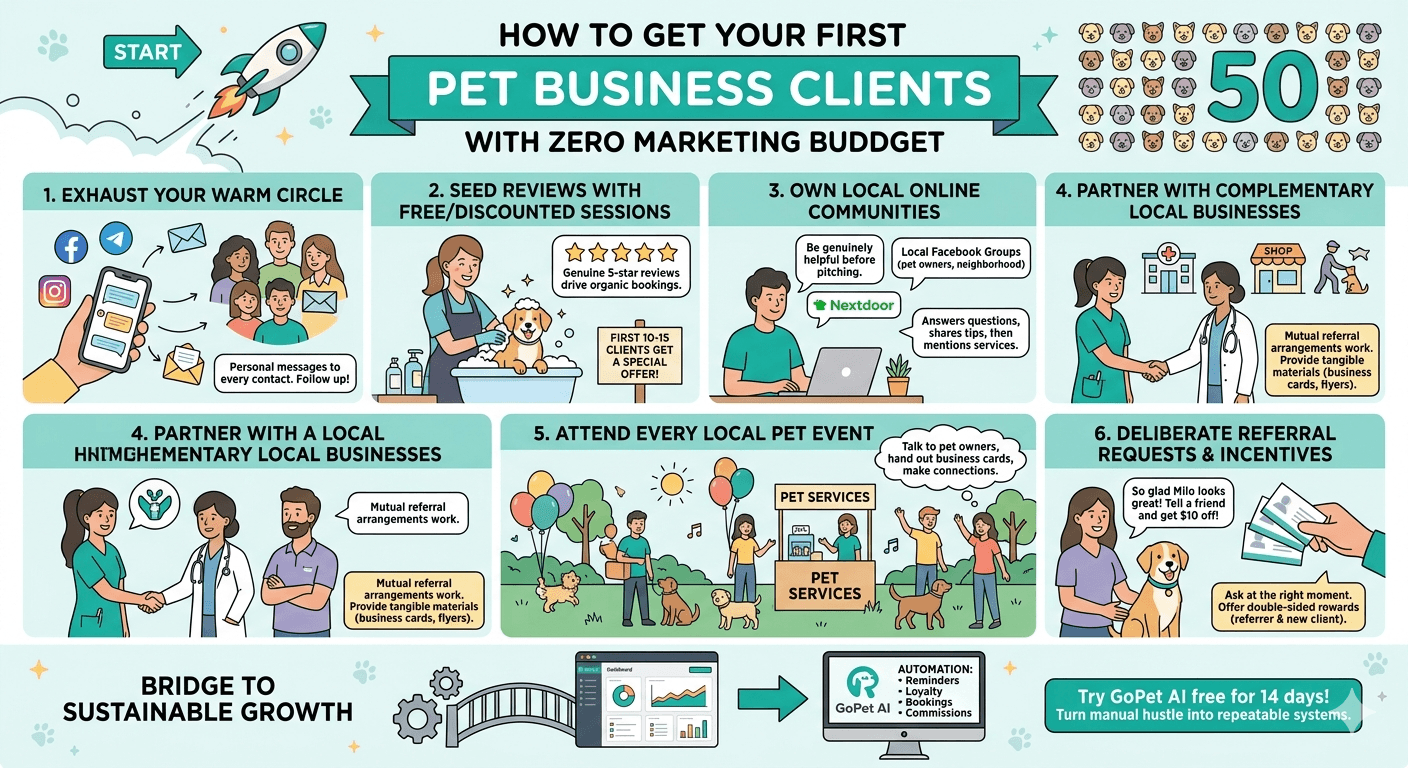
Send a direct, personal message to every person in your phone contacts, every Facebook friend, every Instagram follower, and every former colleague. Do not post a generic announcement. Write a real message that explains what you are doing, why you are doing it, and asks specifically for one of two things: their business if they have a pet, or a referral to someone they know who does.
The message does not need to be long or polished. Something like this works well: "Hey, I just launched my mobile grooming business and I am building my first client base. If you have a dog or cat who needs grooming, I would love to earn your trust with a great first experience. And if you know anyone who might be interested, I would genuinely appreciate an introduction." Personal, specific, and easy to say yes to.
Do not send one message and wait. Follow up. People get busy. A gentle follow-up three or four days later, a simple "just circling back in case this got buried," doubles your response rate. This is sales 101, and it applies just as much to a pet grooming startup as it does to any other service business.
Offer Free or Heavily Discounted Sessions to Seed Your Reviews
In the pet care business, reviews are currency. A new grooming salon with 25 genuine five-star reviews will attract more organic bookings in a month than a salon with no reviews will attract in six months of paid advertising. The fastest way to get reviews is to get clients, and the fastest way to get your first clients when you have no reviews is to lower the barrier to trying your service dramatically.
Offer your first ten to fifteen clients a free or heavily discounted session, explicitly in exchange for an honest review. Be transparent about it: "I am building my reputation from scratch and your feedback would mean everything. In exchange for an honest review, I would love to give you this first session at no charge." Most people respond well to honesty, and many will pay you anyway once they see the quality of your work.
Be strategic about who you offer these sessions to. Prioritize people with pets who are socially active, who post on community Facebook groups, who are known in local pet owner circles, or who seem likely to refer their friends. One well-connected client who posts their experience to a local pet owners group can generate more organic leads than a hundred impressions from a paid ad.
Track every free or discounted session against the reviews and referrals it generates. Within a few weeks, you will have a clear picture of your conversion rate from initial session to paying regular client, which tells you exactly how sustainable your early growth engine is.
Own Your Local Facebook Groups and Nextdoor Communities
If there is a single zero-budget channel that generates more early-stage pet business clients than any other, it is local online communities. Facebook Groups for pet owners, neighborhood groups, Nextdoor communities, and local parenting groups are where pet owners actually ask each other for recommendations. Being present, helpful, and visible in these communities before you ever need to pitch anything is the most effective brand-building activity available to a new pet business with no marketing budget.
Join every local pet owner group in your area. Do not introduce yourself as a business immediately. Spend the first week or two being genuinely helpful: answer questions about local dog parks, share a useful grooming tip, respond warmly when someone asks about managing a nervous dog at the groomer. Establish yourself as a knowledgeable, caring presence in the community before you mention what you do professionally.
When someone posts asking for a groomer recommendation, and this happens in active local groups every single week, you will already have a visible, trusted presence that makes your response land differently than a cold pitch from an unknown business page. Respond helpfully, mention your availability, and include your booking link. That is your whole sales funnel, and it costs nothing.
When you do eventually introduce yourself as a new local business, frame it as a community member sharing something useful, not an advertisement. "I recently launched a mobile grooming service for this area and would love to meet some of the dogs in this community. Happy to answer any grooming questions or offer a discounted first session to any members here." This approach generates genuine engagement rather than the eye-rolls that a promotional post typically receives.
Partner With Complementary Local Businesses
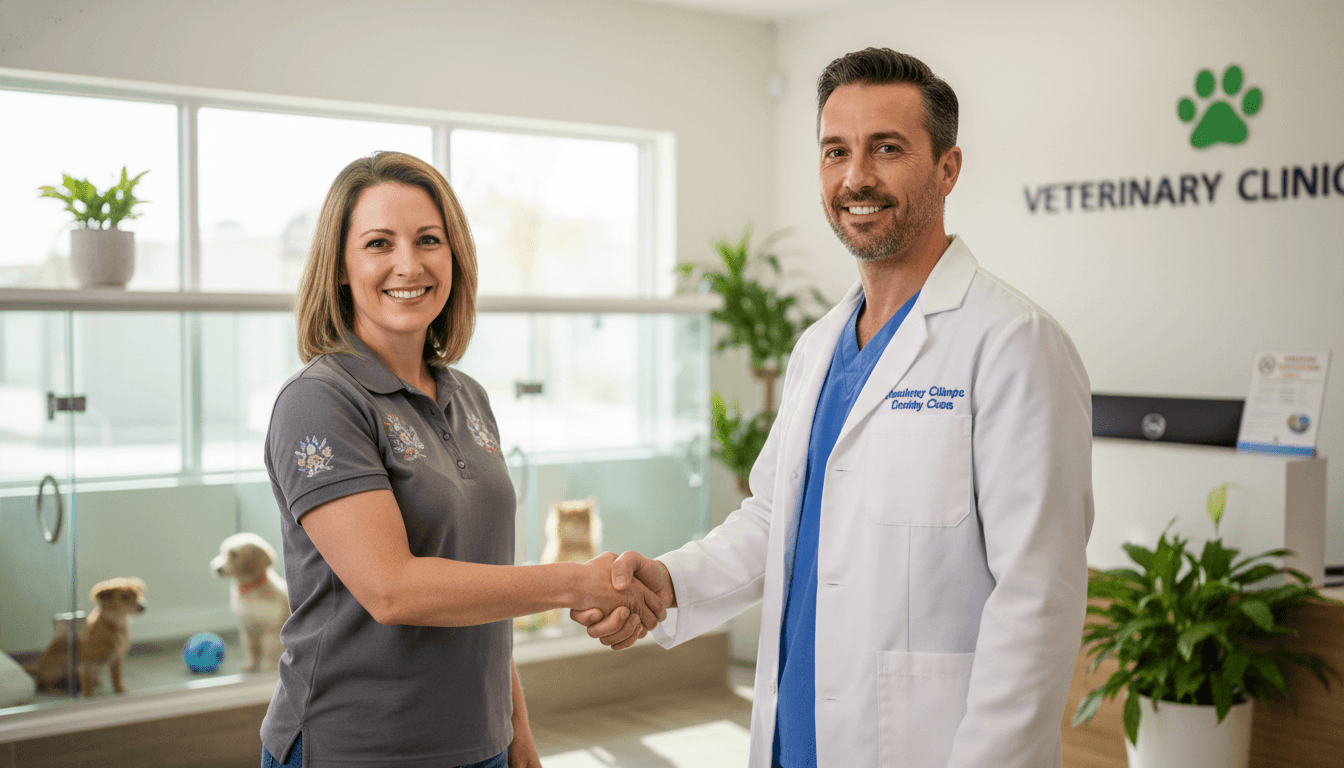
Pet businesses exist in an ecosystem of other businesses that serve the same clients. Veterinary clinics, pet supply stores, dog trainers, pet photographers, dog walkers, and boarding facilities all have client bases full of pet owners who may need exactly what you offer. Building referral relationships with these businesses is one of the highest-leverage, zero-cost growth strategies available to a new pet business.
Make a list of every relevant local business within a reasonable distance. Visit them in person. Bring something small as a gesture of goodwill, a box of treats for the clinic staff, a handwritten card for the shop owner. Introduce yourself, explain what you do, and propose a simple mutual referral arrangement: you will refer your clients to them when relevant, and you would appreciate them mentioning your services to any client who asks.
Veterinary clinics are particularly valuable partners for groomers and boarding facilities. Clients who are already invested enough in their pet's health to visit a veterinarian regularly are exactly the high-value client profile you want. A genuine endorsement from a trusted vet practice, whether a mention from the front desk or a flyer on their bulletin board, carries more weight than almost any paid advertising you could run.
Dog trainers are another high-value referral source. Clients who invest in dog training are spending on their pet's quality of life and are receptive to other professional pet services. A trainer who recommends your grooming salon to a client whose dog needs to look presentable for their graduation class is a warm lead with strong intent.
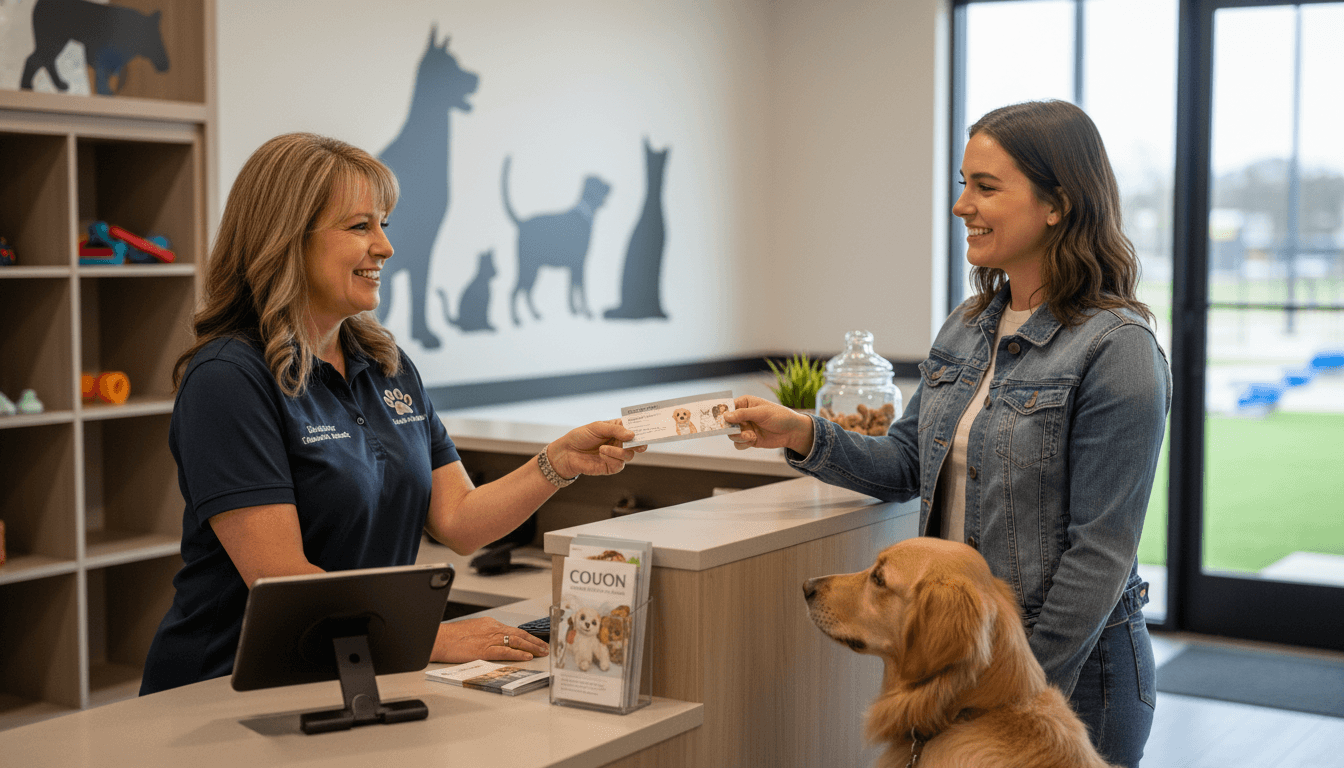
Make the referral relationship easy for your partners by giving them something tangible to hand their clients: a business card with a discount code for first-time clients, a simple one-page overview of your services, or a referral link that lets you track which partner is sending you business so you can reciprocate appropriately.
Show Up at Every Local Pet Event You Can Find
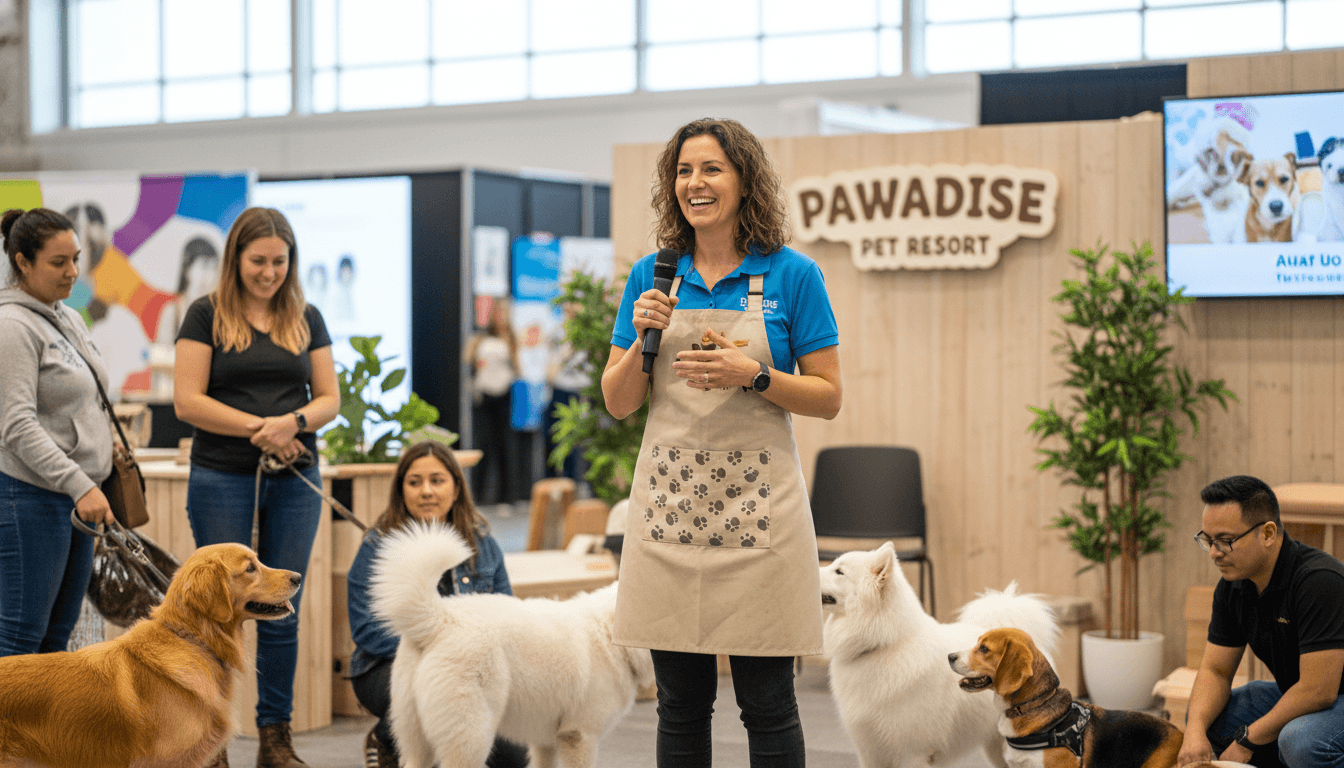
Farmers markets, dog adoption events, pet expos, charity walks for animal shelters, local dog park meetups, and breed-specific club gatherings are all gatherings of your exact target market. Attending them as a participant costs nothing. Setting up a small presence at one as a vendor typically costs a modest booth fee that is almost always worth it in early client acquisition and community visibility.
When you attend as a participant, bring business cards, wear something that identifies your business, and simply talk to people. Pet owners love talking about their pets. Ask about the dog they are walking. Compliment the grooming on a well-presented poodle. Be genuinely interested in the animals around you, because you presumably are. The business conversation follows naturally from a genuine human connection about a shared love of animals.
If you can afford a modest vendor presence at a local pet event, bring a demonstration setup: a groomed pet, a portfolio of before-and-after photos, and a sign-up sheet for a first-session discount. The ROI on local event marketing for pet businesses in the early days is typically far higher than any digital advertising, because the people you meet at a pet event are pre-qualified by their very presence there.
Turn Every Client Into a Referral Machine From Day One
Word of mouth is the primary growth engine for most local pet businesses, but it does not happen automatically. Most satisfied clients will not spontaneously refer their friends unless they are asked at the right moment in the right way. Building a deliberate referral request into your client experience process is the difference between hoping for word of mouth and engineering it.
The right moment to ask for a referral is immediately after a positive reaction. When a client sees their dog after a groom and their face lights up, when a boarding client picks up a happy, healthy pet after a week away and thanks you effusively, that is your moment. A simple, direct ask works better than any scripted pitch: "I am so glad you love how Milo looks. Honestly, the best thing you could do for my business right now would be to tell one friend who has a dog. It would mean the world."
Make referral behavior easy. Give every satisfied client three business cards rather than one. Set up a referral incentive from the start, even a simple "refer a friend and you both get $10 off your next visit" is enough to activate referral behavior in clients who were already inclined to mention you but needed a nudge. Track every referral so you can thank the referring client specifically, which reinforces the behavior and makes them feel valued.
Use Free Digital Tools to Look More Established Than You Are
New pet business owners often underestimate how much a professional digital presence contributes to conversion, even at zero budget. A client who finds you through a local Facebook group will check your online presence before they book. If what they find looks amateur or incomplete, you lose bookings to competitors who look more established, even if your actual quality is higher.
Set up a Google Business Profile on day one. It is free, it makes you findable in local search, and it gives clients a place to leave the reviews you are actively soliciting. Fill it out completely: services, hours, photos, booking link, and a compelling description. An optimized Google Business Profile generates organic local search visibility that would cost hundreds of dollars per month in paid advertising to replicate.
Create a simple Instagram or Facebook business page and post consistently from the very first week. Before-and-after grooming photos, happy clients with their freshly groomed dogs, behind-the-scenes glimpses of your setup, and educational tips about pet care all perform well organically with local audiences. You do not need professional photography. A well-lit phone photo of a great grooming result, posted with a local hashtag and a genuine caption, builds visibility and social proof at zero cost.
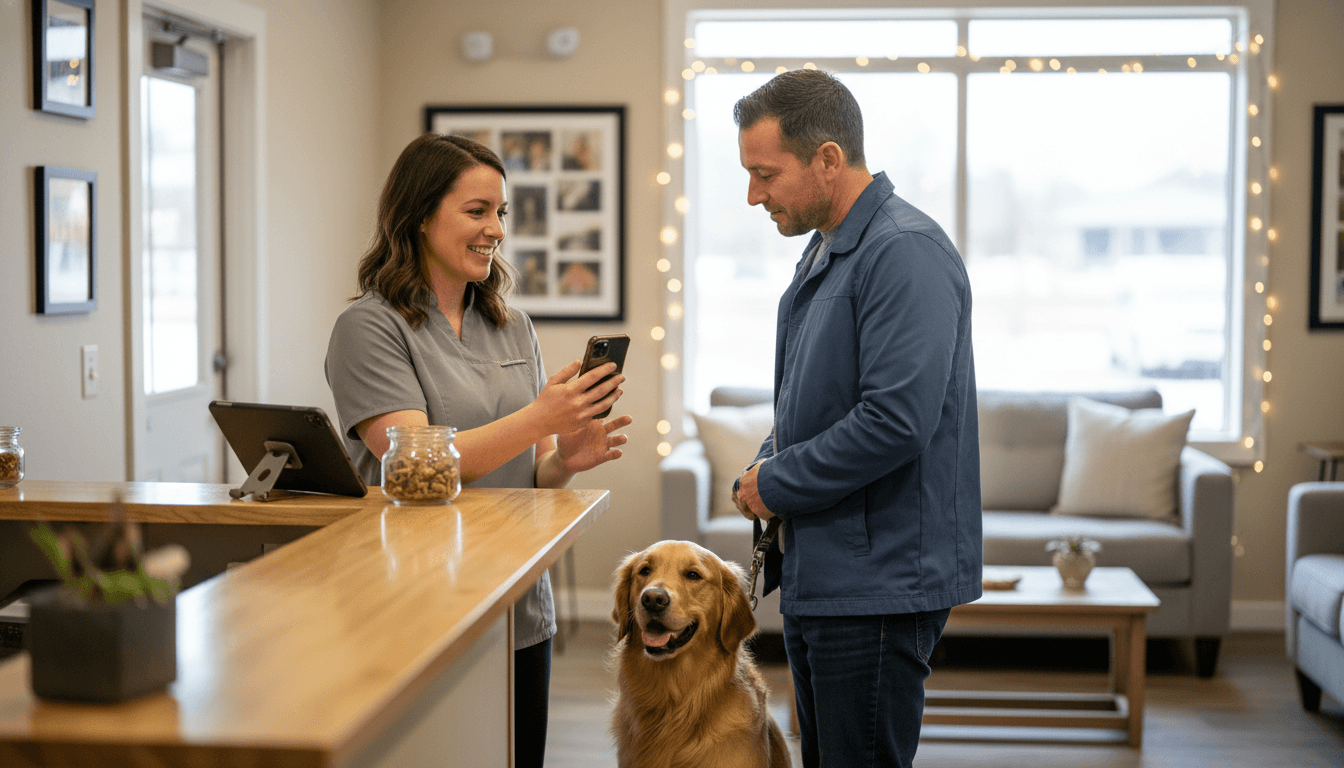
Consider using a free tier of a pet business management platform to handle your bookings and client records from the start. Looking professional in how you confirm appointments, send reminders, and follow up after visits makes a significant impression on early clients who are deciding whether to become regulars. Many platforms, including GoPet AI, offer free trials or affordable starter plans that let you operate with the systems of an established business even when you are just getting started.
The Sales Conversation: How to Close Without Feeling Pushy
Getting in front of a potential client is only half the equation. Converting that conversation into a booked appointment requires a basic understanding of how service sales actually work, and it is simpler than most people expect.
The most effective sales approach for a local pet business is to lead with curiosity rather than pitch. Ask about the client's pet first. What breed? How old? Any specific challenges with grooming? What did they not love about their last groomer? The answers to these questions tell you exactly how to position your service as the solution to their specific situation, and they make the client feel heard rather than sold to.
When it is time to move toward a booking, be direct and make it easy. Do not end a positive conversation with "let me know if you want to book." End it with a specific invitation: "I have openings on Tuesday afternoon and Thursday morning this week. Which works better for you?" Giving a choice between two options rather than an open-ended question dramatically increases conversion rates. The client is deciding when, not whether.
If a client expresses hesitation about price or is not ready to commit, offer the first-session discount you prepared for exactly this moment. Most hesitation in service sales is about perceived risk, not genuine price sensitivity. Reducing the risk of the first appointment with a discount or a satisfaction guarantee removes the primary objection and gets the client into the experience, where your quality does the rest of the selling for you.
The Bridge From Zero Budget to Sustainable Growth
The zero-budget tactics in this guide will get you to your first 20, 30, or 50 clients. They will generate your first reviews, your first referrals, and your first evidence that your service creates real value for real pet owners. At that point, the business conversation changes.
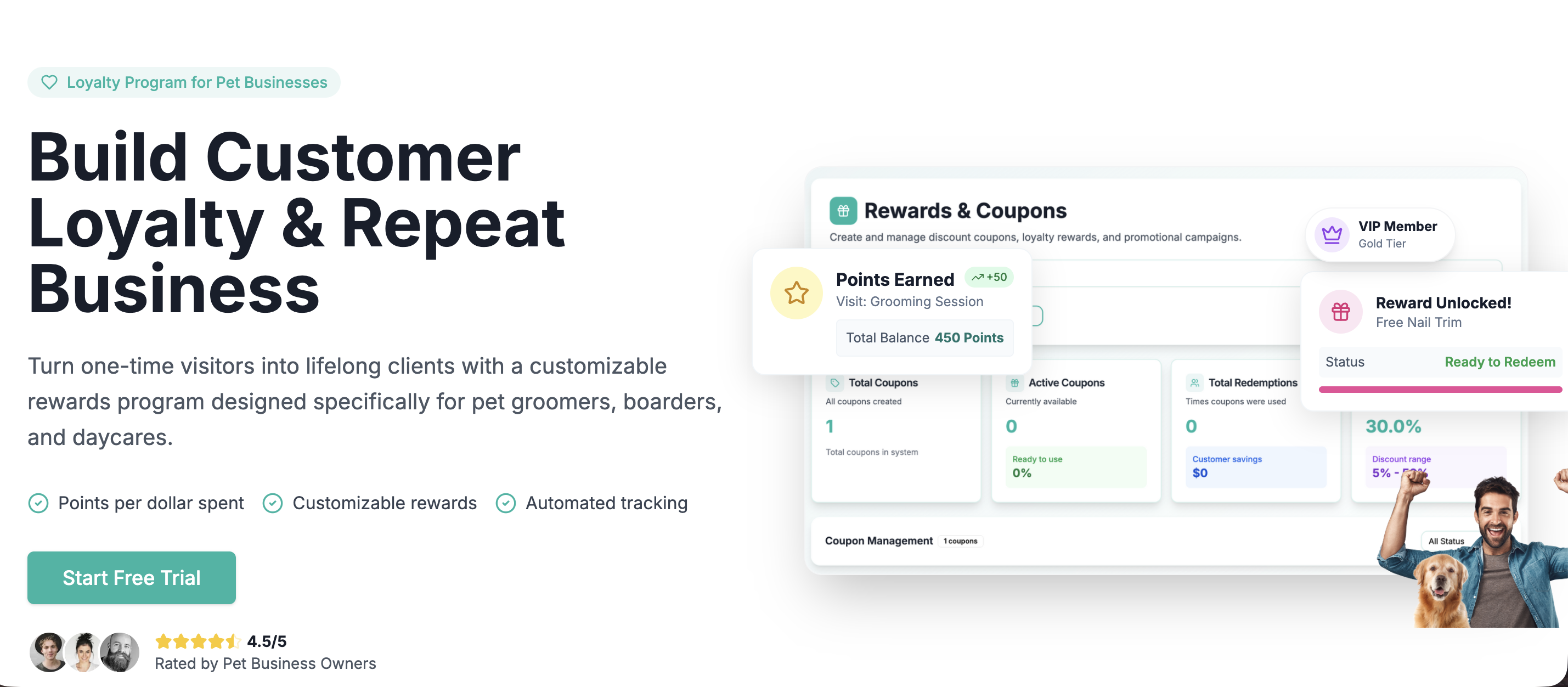
With 30 to 50 active clients, you have enough data to understand who your best clients are, what channels are sending them to you, and what a sustainable growth rate looks like for your specific market. You have cash flow to invest in the tools that make growth systematic: a purpose-built pet care software that automates your reminders, tracks your commissions, manages your loyalty program, and surfaces the analytics that help you make smarter decisions.
GoPet AI is designed for exactly this transition moment. It is affordable enough to justify before your calendar is full, and powerful enough to scale with you as it fills. The automation it provides, from rebooking reminders and win-back campaigns to commission tracking and client segmentation, turns the manual hustle of your first 50 clients into a repeatable system that keeps growing even when you are focused on delivering great service rather than chasing new business.
The businesses that grow fastest are the ones that combine the personal hustle of early-stage sales with the systematic leverage of automation as soon as the economics support it. Start with the tactics in this guide. Add the systems when you are ready. And never stop doing the thing that drives everything else: delivering a service so good that every client wants to come back and bring their friends.
About the author
Jeremy
Petcare Sales Manager
Passionate about helping pet businesses thrive through technology and innovation.
Ready to streamline your pet care business?
Join thousands of groomers, boarding facilities, daycare centres, and vet clinics using GoPet AI to manage bookings, CRM, POS, and invoicing — all in one place.
- ✓Online booking & scheduling
- ✓Invoicing, POS & payments
- ✓CRM & client management
- ✓Staff, loyalty & analytics
Setup in under 2 minutes · Cancel anytime
Related articles
View all
Loyalty Cards, Referral Programs, Coupons and Gift Certificates: The Pet Business Guide to Repeat Sales and New Clients
Read article
Why Your Australian Pet Business Needs Online Booking in 2026 (And How to Set It Up)
Read article