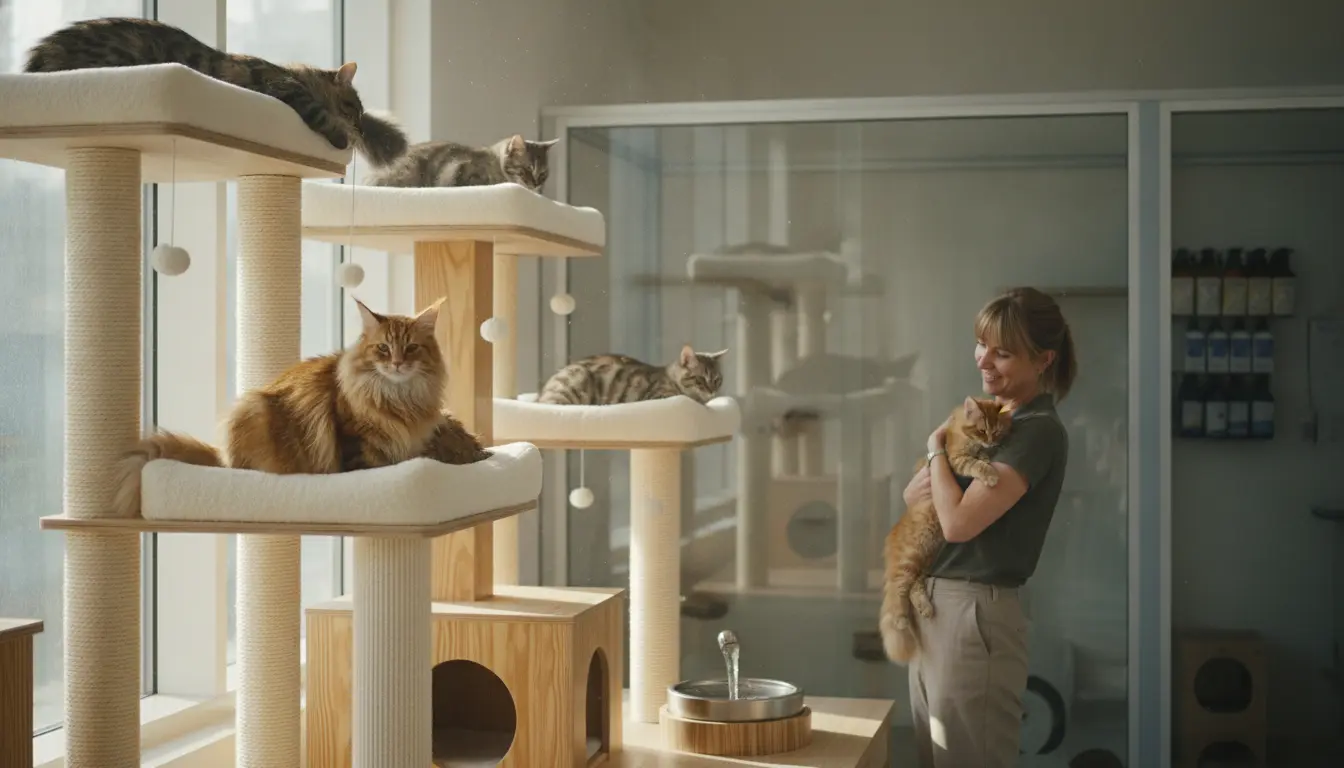
Fireworks Safety for Boarding Kennels: A Practical UK Guide
Prepare your boarding kennel for fireworks season with practical steps for intake, staffing, calming routines, escape prevention and owner communication.
In this article
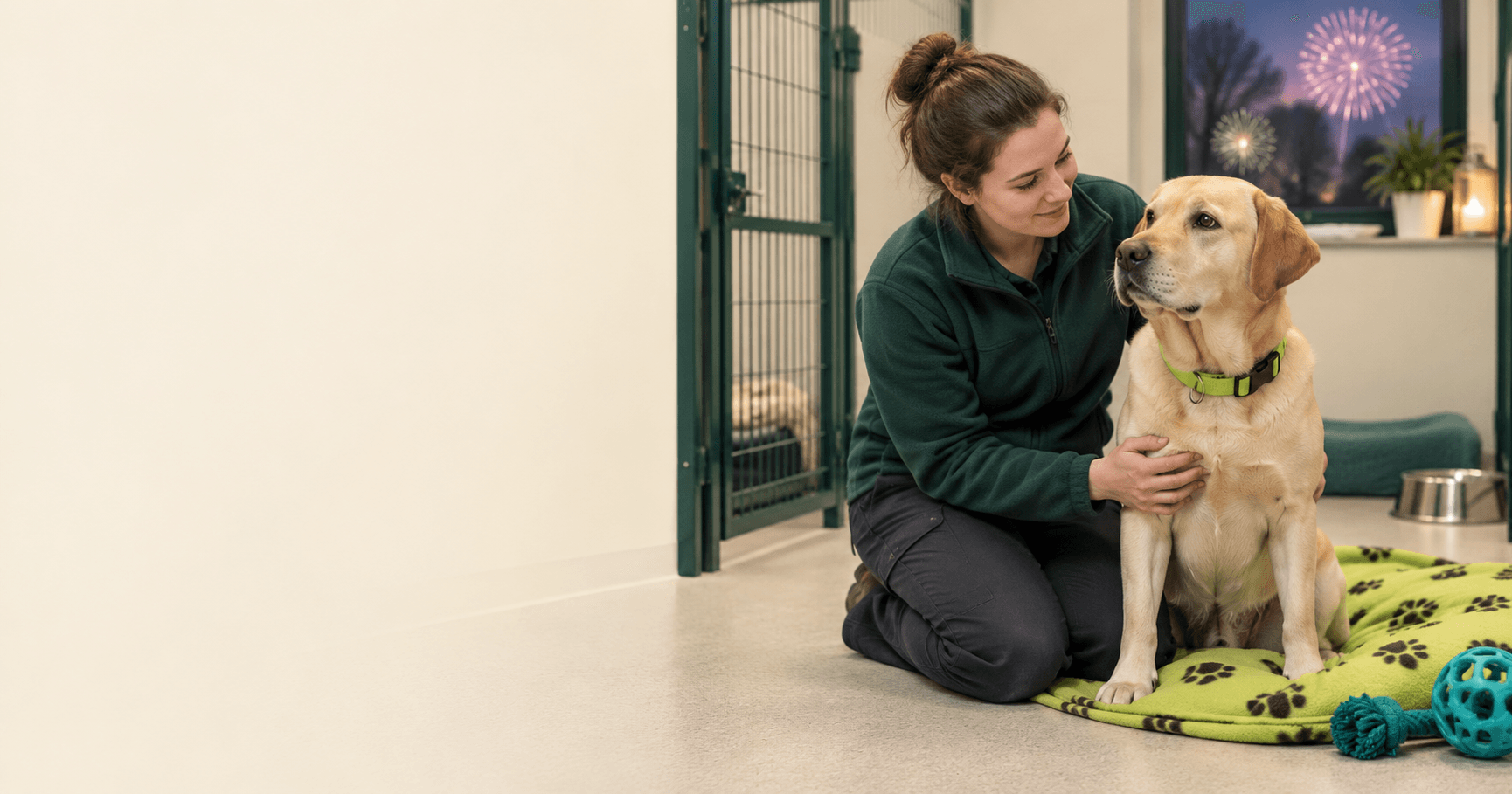
It is 6.30pm on an otherwise ordinary November evening.
The dogs have eaten. The last collection has left. Staff are beginning the evening checks when the first firework goes off somewhere beyond the fence.
One Labrador freezes beside its water bowl. A spaniel starts pacing. Another dog, previously described as “fine with loud noises”, begins scratching at the kennel door.
At home, an owner might be looking after one frightened dog. A boarding business could be responsible for ten, twenty or more animals, each responding differently at exactly the same time.
That changes the problem. Fireworks safety for boarding kennels is not simply about putting on calming music. It is an operational plan involving intake information, staffing, building security, exercise schedules, behaviour monitoring and communication.
The best time to build that plan is not when the sky starts flashing. It is several weeks earlier.
Why fireworks season deserves its own kennel plan
Fireworks are unusually difficult for dogs because the noise, flashes and smells can arrive suddenly and from unpredictable directions. The Royal Kennel Club explains that unexpected explosions can trigger a fight-or-flight response, with reactions shaped by the individual dog’s personality and previous experiences.
In a kennel, one distressed dog can also affect others. Barking may increase, normally compatible dogs may become unsettled and routine tasks can become harder to complete safely.
The risk is not limited to Bonfire Night itself. Private fireworks can be purchased from registered sellers between 15 October and 10 November, as well as during specified periods around New Year, Diwali and Chinese New Year. UK law generally prohibits fireworks between 11pm and 7am, but the permitted period extends to midnight on Bonfire Night and 1am on New Year’s Eve, Diwali and Chinese New Year. Local rules may also apply. GOV.UK’s current fireworks guidance provides the official details.
For kennel operators, the practical conclusion is simple: plan for a season, not a single evening.
Start with better information at booking
A general question such as “Does your dog have any behavioural issues?” is unlikely to reveal everything your team needs.
Owners may not consider noise sensitivity a behavioural issue. Some will answer “no” because their dog has never stayed away from home during fireworks. Others may describe a dog as mildly nervous without mentioning previous attempts to bolt.
Add specific fireworks questions to your booking or pre-arrival form:
- Has your dog previously shown fear during fireworks, thunderstorms or other loud noises?
- What signs of stress does your dog usually display?
- Has your dog ever tried to escape when frightened?
- Where does your dog normally choose to hide?
- What helps the dog settle at home?
- Is the dog accustomed to music, television or white noise?
- Has a vet prescribed anything for noise-related anxiety?
- May we contact your usual veterinary practice if concerns arise?
- Are the dog’s microchip and owner contact details current?
- Is there an alternative emergency contact available?
Avoid promising that a particular technique will keep every dog calm. The purpose of the form is to help you understand the dog’s history and agree on an appropriate care plan.
If a dog has a history of severe distress, encourage the owner to speak to their vet well before the stay. Medication and calming products should only be used according to veterinary instructions. The Royal Kennel Club’s fireworks advice specifically recommends veterinary advice for dogs that have previously been very frightened.
Turn the answers into a visible care plan
Collecting information is only useful if the evening team can find it.
Create a short fireworks care plan for every dog identified as noise-sensitive. It should show:
- The dog’s usual signs of stress
- Known escape or chewing behaviour
- Preferred safe area
- Handling considerations
- Familiar calming routines
- Feeding and toilet adjustments
- Veterinary instructions, where applicable
- Owner and emergency contact details
- The point at which a manager or vet should be contacted
Place the information wherever staff already look during a shift, rather than hiding it in an email or paper form at reception.
England’s statutory guidance for licensed dog boarding kennels requires businesses to monitor animals’ behaviour and record changes, with particular attention to signs such as stress, fear and anxiety. It also requires written procedures covering animal welfare, escape and emergencies. Requirements differ elsewhere in the UK, so businesses should confirm the rules with their own licensing authority. Read the current England kennel-boarding guidance.
A fireworks plan should support those wider procedures, not replace them.
Inspect the kennel as if a frightened dog were testing it
A dog that normally respects a gate may push, climb, dig or squeeze through a gap when panicked.
Before the season begins, conduct a physical inspection during the same lighting conditions your evening staff experience. Check:
- Kennel-door latches and hinges
- Gaps beneath gates and fencing
- Exercise-area boundaries
- Internal corridors and transfer points
- Windows, vents and loose panels
- External doors used by staff or visitors
- Locations where leads are attached or removed
- Key, access-code and emergency-light availability
Kennels and runs in England must open onto secure corridors or another secure area so dogs cannot escape directly from the premises. Even where that exact rule does not apply, a two-stage barrier is a valuable operational safeguard.
Consider how everyday actions could defeat that protection. A delivery driver holding open an outside door or a member of staff moving two dogs at once can create the gap a frightened animal needs.
During higher-risk evenings, assign one person to control arrivals, collections and external doors. Do not allow an unexpected knock at reception to disrupt animal transfers.
Adjust the daily timetable before dusk
Routine can be comforting, but the usual timetable may need to move.
Where suitable for the individual dog:
- Complete longer walks and outdoor exercise during daylight
- Schedule final outdoor toilet breaks before nearby displays begin
- Feed early enough that dogs are not interrupted during their meal
- Refill water bowls before the noisiest period
- Finish non-essential cleaning or maintenance work early
- Reduce unnecessary movement between rooms after dark
- Keep dogs on secure leads during outdoor transfers
The Royal Kennel Club advises owners to walk dogs before dusk, make outdoor areas escape-proof and provide water because anxious dogs may pant more. In a commercial setting, these recommendations need to become assigned tasks rather than good intentions.
Do not remove essential exercise or toilet opportunities simply because fireworks are possible. Instead, decide how these activities can be completed with fewer transitions and stronger controls.
Create calm areas without forcing interaction
Some dogs seek people when frightened. Others try to hide. A good kennel plan allows safe choices within the limits of the facility.
You might:
- Close curtains or suitable visual screens to reduce flashes
- Use familiar background sound at a moderate volume
- Move noise-sensitive dogs to quieter internal units when appropriate
- Provide safe bedding or a den-like retreat
- Keep lighting and staff behaviour calm and consistent
- Separate dogs if stress changes their social tolerance
- Offer suitable enrichment to dogs that will engage with it
Never force a dog out of its retreat or punish stress-related behaviour. A dog that will not accept treats is still communicating useful information; your team should record the change and follow the escalation plan.
Be cautious with sound-desensitisation recordings. The Royal Kennel Club recommends introducing recordings quietly and gradually over weeks or months, stopping if the dog shows distress. A busy kennel should not begin an improvised exposure programme on Bonfire Night.
Staff for the difficult hour, not the average day
The period around dusk may require more attention than your usual occupancy figure suggests.
Review whether one person can realistically:
- Monitor noise-sensitive dogs
- Complete toilet breaks
- Answer owner calls
- Handle late collections
- Record behavioural changes
- Respond to an emergency
- Maintain control of entrances
If the answer is no, overlap shifts or add cover for the likely peak period.
Hold a short briefing before every higher-risk evening. Identify which dogs need closer observation, who controls doors, who contacts owners and who makes the decision to call a vet.
Use clear escalation levels:
Level 1: Mild concern
The dog is alert, hiding or temporarily reluctant to eat but remains responsive.
Follow the agreed calming routine and increase observation.
Level 2: Significant distress
The dog is persistently pacing, panting, vocalising, attempting to escape or unable to settle.
Move to the agreed safe area if that can be done safely, inform the manager and consider contacting the owner.
Level 3: Immediate welfare risk
The dog is injuring itself, collapsing, experiencing breathing difficulty or showing another urgent medical concern.
Follow the emergency procedure and contact a veterinary professional without delay.
These are operational examples, not veterinary diagnoses. Your own escalation protocol should be agreed with your veterinary provider.
Tell owners what you are doing before they ask
Owners of noise-sensitive dogs may be anxious too. Silence from the kennel can make that anxiety worse.
Send a short pre-stay message explaining:
- That you have a fireworks procedure
- What information you require from them
- Whether exercise or collection times will change
- What comfort items they may bring
- How veterinary instructions must be supplied
- When your team will provide an update
- How you will contact them if their dog becomes distressed
Avoid sending constant updates during the busiest part of the evening. Agree on one useful update window unless there is a welfare concern.
After the stay, share any meaningful behavioural observations. This helps the owner prepare for future events and gives your team better information if the dog returns.
Review the night while the details are fresh
The following morning, spend ten minutes reviewing what happened.
Ask:
- Which dogs reacted differently from their intake information?
- Were all care plans easy to locate?
- Did any door, gate or transfer point feel vulnerable?
- Was staffing sufficient during the busiest period?
- Did background sound or room placement appear helpful?
- Were owners contacted at the right time?
- Did staff record observations consistently?
- What should change before the next likely display?
Fireworks season includes multiple celebrations and informal events. Every evening gives you a chance to improve the next one.
The goal is not to guarantee a completely stress-free night. No kennel can control every firework or predict every animal’s response. The goal is to make the environment more secure, the team more prepared and the response less dependent on hurried decisions.
Fireworks preparation checklist for boarding kennels
Four to six weeks before
- Review local event dates and council guidance
- Update your fireworks risk assessment
- Inspect fencing, latches, corridors and external doors
- Add fireworks questions to intake forms
- Confirm your veterinary and emergency contacts
- Identify quieter units or safe areas
- Review staff availability
One week before
- Review every booked dog’s noise-sensitivity information
- Request missing owner or veterinary instructions
- Create individual care notes
- Confirm shift responsibilities
- Test lighting, locks, phones and background-sound equipment
- Message affected owners about timetable changes
On the day
- Brief the whole team
- Complete appropriate exercise before dusk
- Refill water and prepare safe areas
- Limit unnecessary door movements
- Keep leads ready at transfer points
- Monitor and record behavioural changes
- Follow the agreed escalation procedure
The next morning
- Check every dog for injuries or unusual behaviour
- Update owners where appropriate
- Record new information in each pet’s profile
- Review operational problems with staff
- Correct physical or procedural weaknesses before the next event
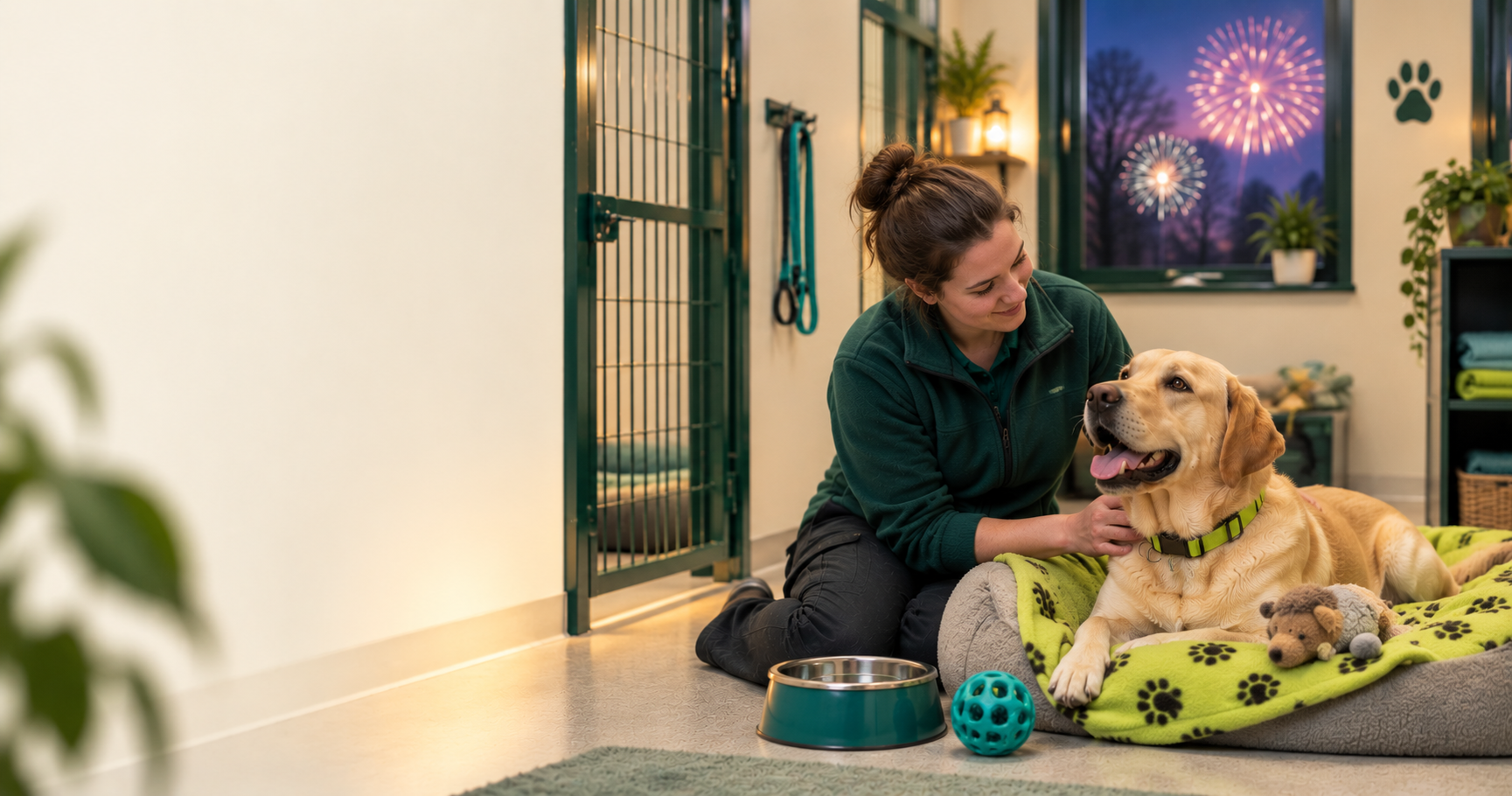
Make important care information easier to find
Paper forms and scattered messages make seasonal care plans harder to manage. GoPet AI’s custom pet intake forms can collect behavioural notes, emergency contacts and medical information before arrival and add them to the pet’s profile.
Its pet boarding software also keeps bookings, pet details, health alerts and daily operations together. It will not replace professional welfare judgement, but it can give staff a clearer view of the information needed to make that judgement.
About the author
Jeremy
Petcare Sales Manager
Passionate about helping pet businesses thrive through technology and innovation.
Ready to streamline your pet care business?
Join thousands of groomers, boarding facilities, daycare centres, and vet clinics using GoPet AI to manage bookings, CRM, POS, and invoicing — all in one place.
- ✓Online booking & scheduling
- ✓Invoicing, POS & payments
- ✓CRM & client management
- ✓Staff, loyalty & analytics
Setup in under 2 minutes · Cancel anytime
Related articles
View all
Pet Grooming Appointment Software: The Complete 2026 Buying Guide for US Groomers
Read article
Pet Shop POS Hardware Guide: Tablets, Receipt Printers, Barcode Scanners & Setup Costs
Read article